

By Tyler Charbonneau, DVM, DACVD, Dermatology
Introduction
Spring and summer are just around the corner, bringing with them warmer weather and days at the beach. However, these seasons also mark the beginning of another challenging allergy period for our itchy and allergic patients.
The Challenge of Environmental Allergies
Environmental allergies are a frustrating and constantly evolving condition for both patients and their owners. One of the most difficult aspects is the chronic and lifelong need for therapies and ongoing management. As dermatologists, our primary goal is to identify the safest and most effective treatments that keep our patients’ allergies stable and maintain the human-animal bond. Fortunately, there are several newer symptomatic anti-itch and immunomodulatory therapies available—such as Cytopoint, Apoquel, Zenrelia, and Atopica—which can be used for long-term management when appropriate. Despite these advances, there are still cases of severe skin conditions and allergies where steroids are the best option for providing immediate relief. These symptomatic therapies and steroids are often utilized to keep patients comfortable while we perform allergy workups to support long-term comfort. For chronic allergy sufferers, skin testing and allergen-specific immunotherapy represent the ideal long-term solution. Immunotherapy is a safe and often highly effective approach that should be considered for all allergic patients, regardless of the severity of their condition.
Benefits of Allergen-Specific Immunotherapy
Allergen-specific immunotherapy stands out as the only allergy treatment with the potential to reverse the atopic condition and prevent the progression of allergies. The ultimate goal is to minimize the need for long-term immune-modulating medications for many patients.
Determining Good Candidates for Allergy Testing
Which patients are suitable for testing? Any dog or cat older than one year, exhibiting seasonal or year-round allergy symptoms that do not improve with a strict elimination diet trial, is considered a candidate for allergy testing.
Special Considerations for Allergy Testing
For environmental allergy testing, both intradermal and serum allergy testing are ideally recommended for every patient. Some pets may yield better results from one test over the other, and the results often do not completely overlap. Standard Northeastern regional allergens are used in testing, and special allergens of interest to clients—such as rabbit dander, horse dander, farm grains, cat dander, etc—can also be included with intradermal and serum allergy testing.
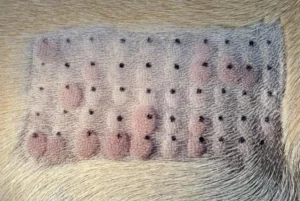
Intradermal Testing: Procedure and Outcome
The intradermal allergy testing, also known as a skin patch test, is considered the “gold standard” method due to its potential for fewer false positives and its comprehensive nature. The disadvantages include the need for sedation and the requirement to discontinue certain drugs, such as antihistamines and steroids, prior to testing. For skin patch testing, light sedation is used, and the coat is clipped on one side of the chest minimizing any cosmetic impact on the coat. Northeast regional allergens (pollens, molds, house dust mites, etc) are injected into the skin with tiny needles, and the area is observed for inflamed, red skin—indicating an allergic response—within 20 minutes. Based on these results, a customized allergen immunotherapy serum is created, which can be administered as weekly to bi-weekly injections or daily oral drops.
Serum (Blood) Allergy Testing
In a blood allergy test, a blood sample is collected and sent to a laboratory, where the levels of specific antibodies to allergens are measured. Results are usually available within two weeks. The advantages of blood allergy testing are that sedation is not required, and medications such as antihistamines and steroids do not need to be stopped. However, the disadvantages include a higher likelihood of false positive results and variable sensitivity and specificity among different laboratories.