
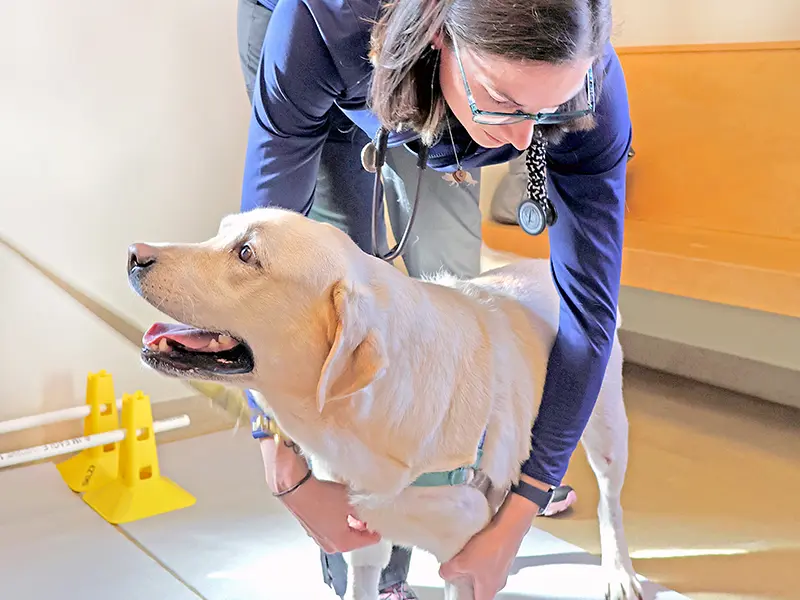
- Gait and posture evaluation
- Diagnostic workups for lameness and performance issues
- Musculoskeletal (MSK) ultrasound
- Radiographs
- CT scan
- MRI
- Genetic testing
- Diagnostic joint anesthesia (“joint blocks”)
- Targeted, interventional pain management
- Therapeutic injections (intra-articular, lumbar epidural, and cervical perineural)
- Regenerative medicine
- Platelet-rich plasma (PRP)
- Mesenchymal stem cells (MSCs)
- Regenerative medicine
- 2.5% polyacrylamide hydrogel (Arthramid Vet)
- Hyaluronic acid
- Corticosteroid
- Therapeutic injections (intra-articular, lumbar epidural, and cervical perineural)
- Modalities
- Shockwave therapy
- Laser therapy
- Thermal modalities (heat therapy, cryocompression)
- Injury prevention and conditioning for working/sporting dogs
- Fitness assessments
- Individualized conditioning programs
- Therapeutic exercise for injury recovery and maintenance of chronic musculoskeletal disease
- Rehabilitation programs to improve strength and flexibility
- Post-operative
- Geriatrics
- Non-surgical orthopedic/neurologic disease
- Inpatient physical rehabilitation
- Post-operative rehabilitation for various orthopedic and neurologic procedures
- Bedside rehabilitation for critical care patients
- Assistive device assessments and fittings
- Custom orthoses (braces) and protheses
- Carts (hindlimb and quad carts)
- Hobbles
- Orthopedic screening for breeding fitness
- PennHIP radiographs
- OFA radiographs (hips, elbows, shoulders, stifles)
- OFA patella checks
- Conformation assessment
- Weight loss programs
Sports Medicine & Rehabilitation
At PVESC, our Sports Medicine & Rehabilitation team provides comprehensive, individualized care to help pets recover from injury, manage chronic pain, and optimize mobility and performance. Whether your pet is healing from surgery, living with a chronic condition, or an active athlete needing conditioning, we’re here to help them move and feel their best.
Our Services
Coming Soon
- Therapeutic ultrasound
- Transcutaneous electrical nerve stimulation (TENS)
Neuromuscular electrical stimulation (NMES) - Under water treadmill
- Acupuncture
- Spinal manipulation therapy (“animal chiropractic”)
Conditions We Treat
Our team works with pets experiencing a wide range of conditions, including:
- Joint conditions
- Osteoarthritis
- Hip/elbow dysplasia
- Cranial cruciate ligament (CCL) injury
- Patellar luxation
- Joint instability
- Neurologic conditions
- Intervertebral disc disease (IVDD)
- Fibrocartilaginous embolism (FCE)
- Degenerative myelopathy
- Peripheral nerve injuries (i.e. brachial plexus avulsion)
- Cervical spondylomyelopathy (Wobbler’s syndrome)
- Obesity
- Performance issues for working/sporting dogs
- Soft tissue injuries (acute and chronic):
- Calcanean (Achilles) tendinopathy
- Biceps tenosynovitis
- Supraspinatus tendinopathy
- Iliopsoas strain
- Fibrotic myopathy (gracilis, semimembranosus, infraspinatus)
- Carpal hyperextension
A Collaborative Approach
We work closely with your primary care veterinarian and other specialty teams at PVESC to ensure a seamless, coordinated approach to your pet’s care. Our goal is to help each patient achieve their highest possible level of function, comfort, and quality of life.
Is Rehabilitation Right for Your Pet?
If your pet is recovering from an injury or surgery, struggling with mobility, living with chronic pain, or could benefit from fitness conditioning, our Sports Medicine & Rehabilitation team can help. Talk to your veterinarian about a referral or contact us to learn more.
Meet Our Sports Medicine & Rehabilitation Doctors
Frequently Asked Questions
The word “chemotherapy” usually evokes unpleasant thoughts in most people’s minds. We prefer to think of it as “therapy” for a disease, in the same way people take medications for certain illnesses. The ultimate goal of therapy would be to cure the patient of cancer. In most instances at this point in time in veterinary medicine, this goal is not realistic. The goal we do strive for is to control a rapidly progressive disease, prevent the spread of the tumor, restore deteriorated function, and provide a good quality of life during the time of remission.
The term “remission” means a time interval during which there are no outward signs that the patient has cancer. In the case of lymphoma, if the maximum combination protocol is used, it is expected that 80% or more of patients will go into full remission. The average duration of remission is longer than 12 months. Unfortunately, it is impossible to predict which animals will achieve full remission or for how long. We do know, however, that if no therapy is used, most pets will die from their disease in a few days to a few weeks.
Outcomes depend on the:
- Willingness/availability of the owner to commit for the treatment schedule
- Client expectations/desires
- Cost of the treatment
- Response of the patient to the treatment
Care of the cancer patient requires unique skills, expertise, drugs, procedures, philosophies, and supportive care. These all will be discussed in-depth to assist you in determining what path will be best for your particular circumstances.
Patients usually have a dynamic course to their disease and treatment. Estimates for treatment costs do not include treatment for unexpected illness, chemotherapy, or hospitalization. Our oncology team will strive to provide you and your pet with compassionate care as you take this journey with us.