Neurology

When your pet has a neurological issue, whether sudden or ongoing, our board-certified veterinary neurologists and neurology team are here to help. With advanced diagnostics, on-site MRI availability every day, and surgical and medical expertise, we provide gold standard care for dogs and cats with complex neurological conditions.

Conditions We Diagnose & Treat

We manage a wide range of neurological disorders, including:

  • Intervertebral disc disease
  • Seizures
  • Vascular events (such as strokes)
  • Meningitis / meningoencephalomyelitis (immune-mediated or infectious)
  • Traumatic brain injury
  • Lower motor neuron disease
  • Chronic neuropathic pain
  • Brain and spinal cord tumors

Services & Procedures Offered

To diagnose and treat these conditions, our neurology team offers:

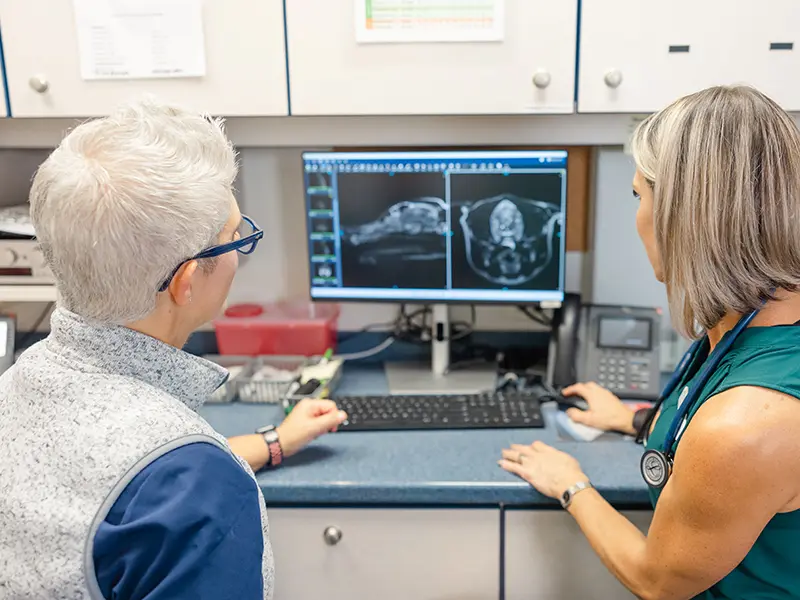
  • Magnetic Resonance Imaging (MRI) — fast, detailed imaging for brain and spinal cord disorders
  • Cerebrospinal fluid (CSF) tap — sampling for infectious agents, inflammation, etc.
  • Neurosurgery, including procedures like:
    • Hemilaminectomies
    • Ventral slots
    • Craniotomies
    • Dorsal laminectomies
  • Muscle and nerve biopsies
  • Infectious disease testing
  • Extracorporeal shock wave therapy (ESWT)

What to Expect: Appointments & Emergency Care

  • Our neurologists see clients for scheduled appointments 5 days per week.
  • We also handle neurological emergencies 24/7 every day of the year.
  • If you think your pet may have a neurological issue (new onset seizures, sudden weakness, spinal pain, etc.), we encourage you to call us right away at (207) 878-3121 to schedule.

Financial & Insurance Considerations

We understand that specialized neurological diagnostics and surgeries are a significant investment. A few cost benchmarks:

  • Average MRI (uncomplicated case): ~ $5,000
  • Average spinal surgery (uncomplicated): ~$7,000-$10,000

To help manage these costs, we:

  • Work with many pet insurance providers
  • Offer flexible payment options (e.g., CareCredit, Trupanion Prepay, Scratch Pay)

Why PVESC’s Neurology Service is the Right Choice

  • Expertise: Board-certified veterinary neurologists combining medical and surgical approaches.
  • Diagnostics: On-site MRI every day ensures quicker, more accurate diagnoses.
  • Comprehensive care: From minimally invasive diagnostics to major surgery and long-term follow-up.
  • Owner support: Clear communication, financial transparency, and support through treatment decisions.

Schedule an Appointment

If your pet is showing signs such as seizures, weakness, paralysis, unusual head tilt, or spinal pain, don’t wait.

Resources

Commonly Asked Questions Regarding Neurology Appointments

What should I expect when I arrive for my neurology consultation? Please check in with the front desk when you arrive for your appointment, so…

Read more

Seizures

Seizures are the most common neurological problem in dogs and cats. To help understand what you can do to help, here is an overview including…

Read more

About MRI and CT in Veterinary Medicine

Why use MRI in neurology? In both human and veterinary neurology, magnetic resonance imaging (MRI) is the gold standard imaging modality. MRI uses a strong…

Read more

Meet Our Neurology Doctors

Danielle Eifler

Danielle Eifler

DVM, DACVIM, Neurology, Certified Veterinary Neurosurgeon
Learn More
Amanda Landry

Amanda Landry

DVM, DACVIM, Neurology
Learn More

Frequently Asked Questions

A referral from your primary veterinarian helps but isn’t always required. If your pet is exhibiting clear neurological symptoms, we can often arrange appointments directly. The referral helps ensure we have previous medical history and prior work-ups.

Your pet will need a physical exam first. MRI requires anesthesia to keep them still. After imaging, our neurologists interpret the results and work with you to develop a treatment plan, which may include surgery, medical therapy, or both.

It depends on the procedure type, location, your pet’s age and overall health. Recovery often involves hospitalization, pain management, possibly physical therapy, and strict monitoring. Full recovery can take weeks to months depending on the case.